We talked about tool use. We talked about grounding.
But there’s one more thing we probably use every day and just don’t know what it’s called. Or heard the name, but not sure what it actually is..
Ladies and Gentlemen! MCP!
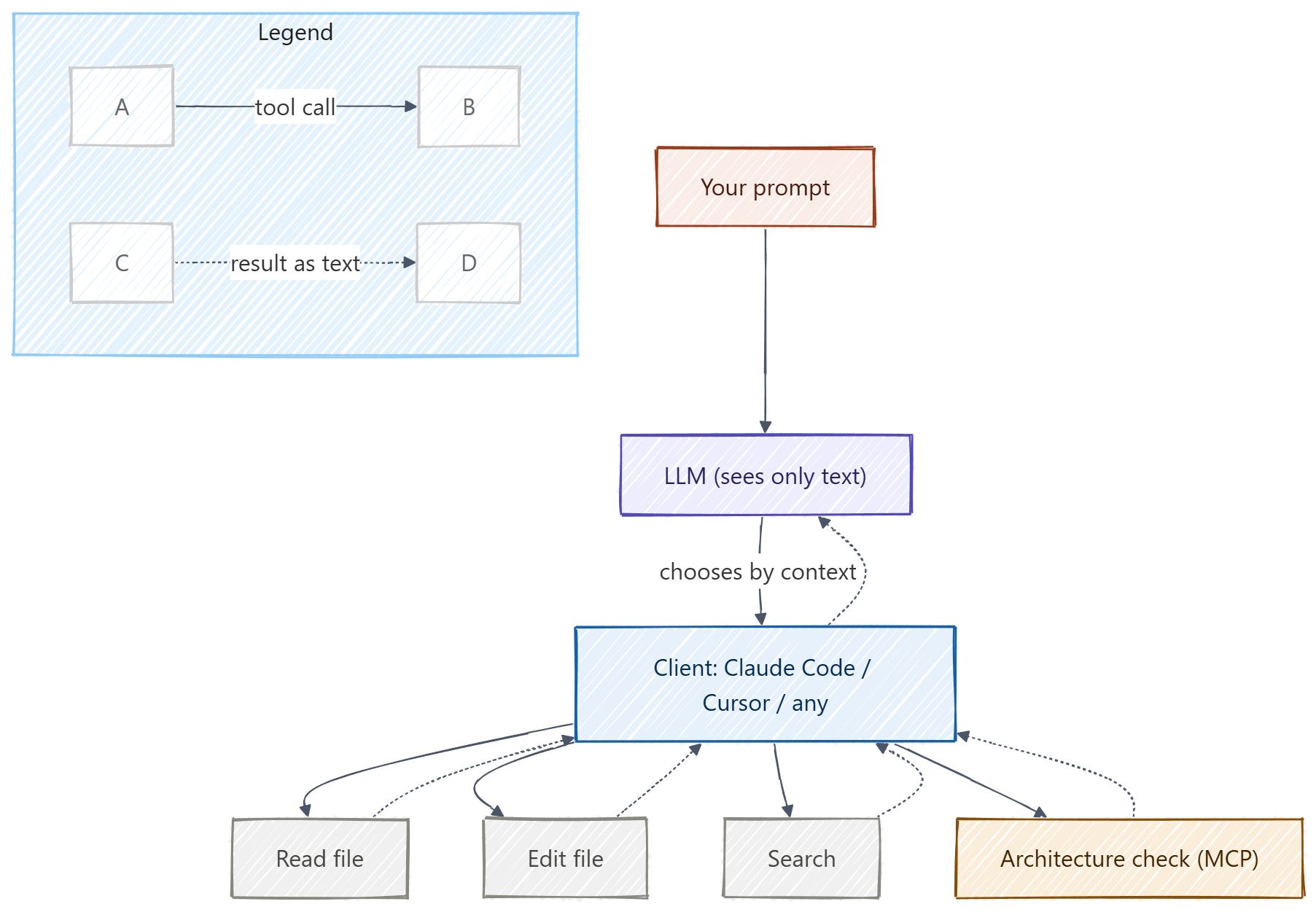
So. LLM can only do one thing: work with text. To expand its capabilities, tool use happened. Read files, edit, generate images.
But what if that’s not enough?
Your project is unique. You need a tool that simply doesn’t exist.
Option 1: knock on Anthropic’s door. Say: “hey, add a new tool” There are thousands of people like that. Nobody gonna do it. Well, unless you’re very, very lucky. 😉
Or Option 2: MCP
That’s exactly why MCP was created - Model Context Protocol.
So that anyone can write their own tool and use it with a language model. For example, you want the model to validate your project’s architecture. That tool doesn’t exist anywhere, because every architecture is unique. You write an MCP server, and the model can call it.
And here’s what makes MCP different from something like a skill or a slash command: you don’t have to think about it. You built it, connected it and it just gets called when the context requires it. No “/check-this” needed. The model figures it out.
And here’s what’s interesting: LLM has no idea the tool came through MCP. For it, it’s just text in context. Built-in tool or your own, doesn’t matter. The protocol exists for the client and the server. Not for the model.